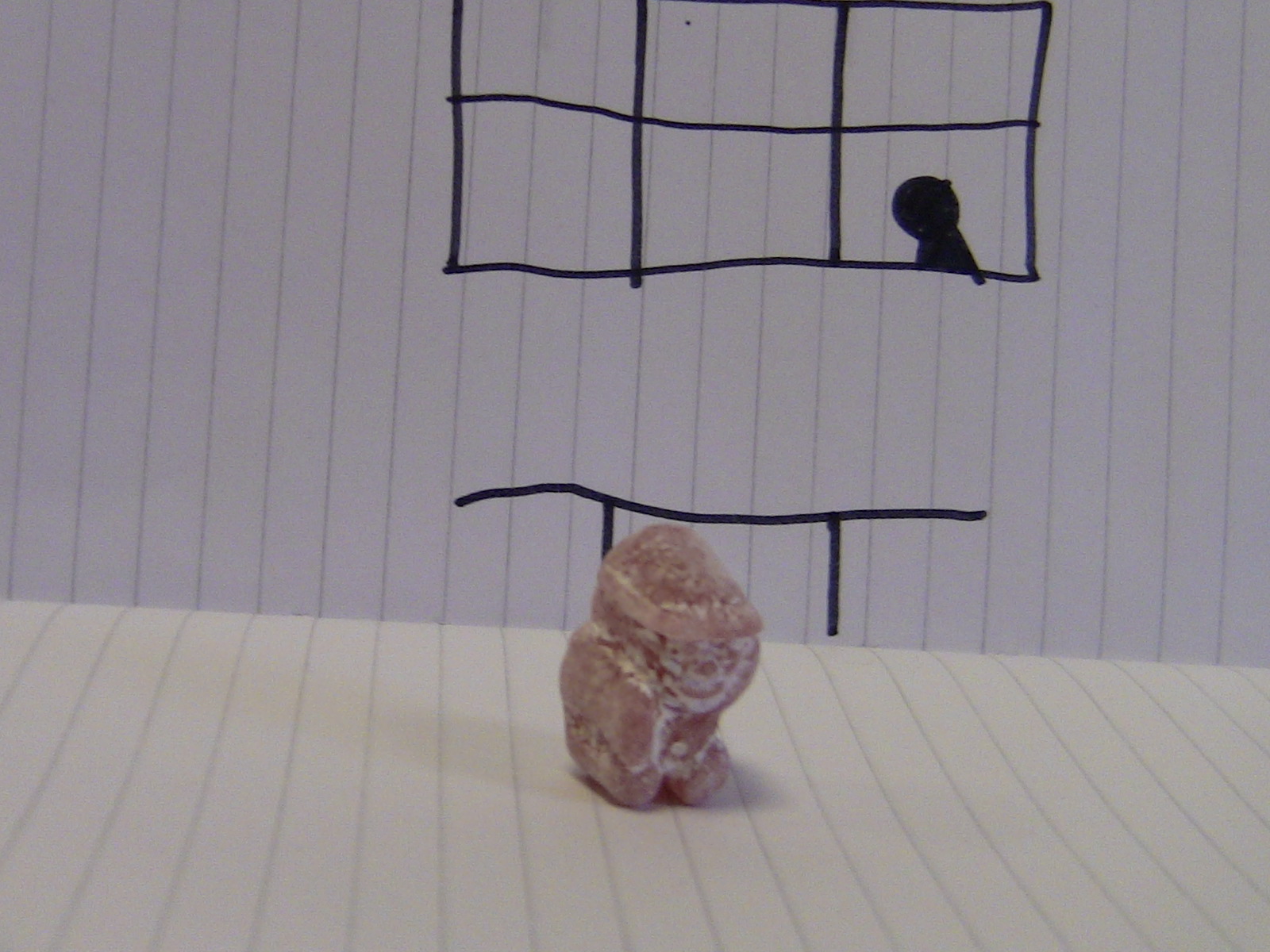
One of the main conventions used in the thriller genre are cliffhangers: in Alfred Hitchcock's films, cliffhangers played a dominant role. In Saboteur, they had a literal cliffhanger:

The man on the Statue of Liberty was very good for its time, which was 1942.
Also there was the scene in Mount Rushmore in North by Northwest in 1959, in which there are 2 people hanging from the top of Mount Rushmore.
These two scenes show that cliffhangers/scenes that are very high above the ground are common in major Hitchcock films.
These two scenes show that cliffhangers/scenes that are very high above the ground are common in major Hitchcock films.
Convention 2
The use of music and suspense are very important conventions in thriller films. This is because they keep the viewer watching and is done well in the Hitchcock film Psycho, where the use of music keeps us watching when the woman gets killed at the beginning but the killer is not revealed and there is a feeling of suspense.
Convention 3
The use of blood, obviously, has a dramatic effect and is a key characteristic for this style of film. In the famous shower scene in Psycho, you can see the blood falling into the plug of the shower, and even though it is black and white, you can still tell that it is blood, which must have been difficult to do as it was made over 50 years ago. Also, you see the motion of the killer stabbing but you do not see it going into the victim's body.
This scene may have influenced other film directors to use blood as Hitchcock was one of the first thriller film makers, and it set the boundaries for thriller films, until over the years films became more graphic and you do see actual people being stabbed.
A very powerful way of keeping the viewer watching and making them know a murder is about to happen is the use of the shadow. The viewer knows that someone could be killed or is being watched, keeping the tension and making the viewer wanting to know what will happen next. When focusing on filming when we are considering the lighting, we could think about using a shadow for a dramatic effect on the viewer.
Convention 4